




 Contact Us


Many people treat "embroidery" as one uniform craft — it's not. Pakistani embroidery includes distinct materials and stitches with different visual effects, durability and care needs.
If you want to tell Tilla from Zardozi, choose the right embroidered outfit for an event, or keep a delicate Resham-embroidered kurta looking fresh, this guide answers those exact questions up front and provides practical buying and care advice.
What each technique actually is (quick ID guide)
Pakistani embroidery guide — the simplest way to identify the four styles in this article:
- Tilla: Narrow, flat metallic thread (often gold or silver-plated) used for outlining and filling. Look for thin, shiny lines that sit relatively flat on the fabric.
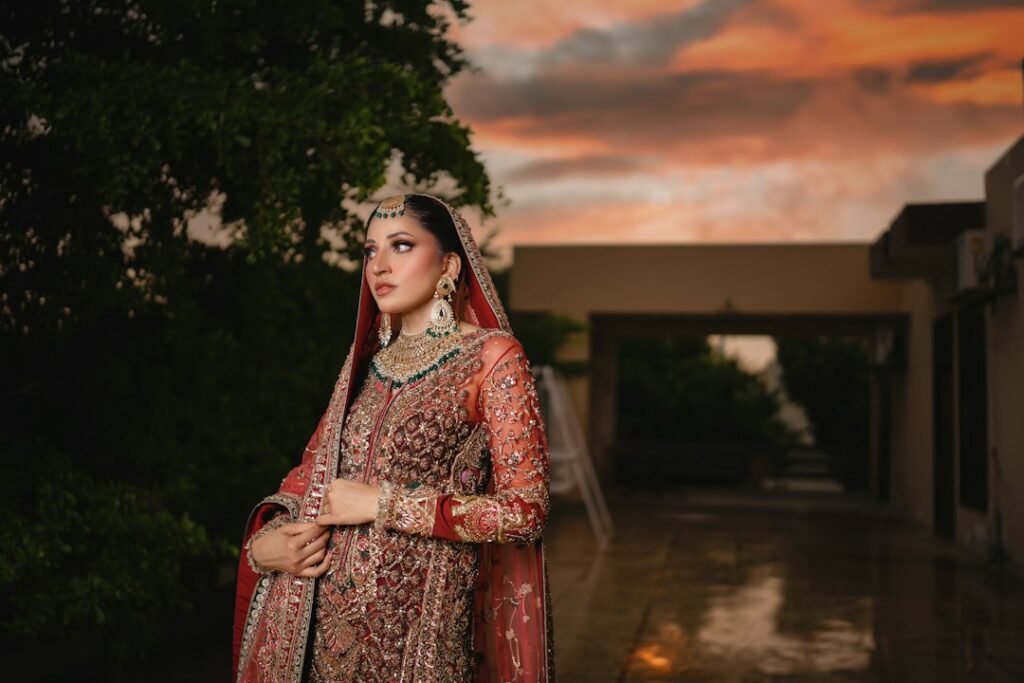
- Zardozi: Heavier metalwork using thicker metallic threads, metal wires, sometimes wires coiled around a core, and often combined with beads and sequins. Zardozi has a raised, sculptural surface and is common on bridal and formal wear.
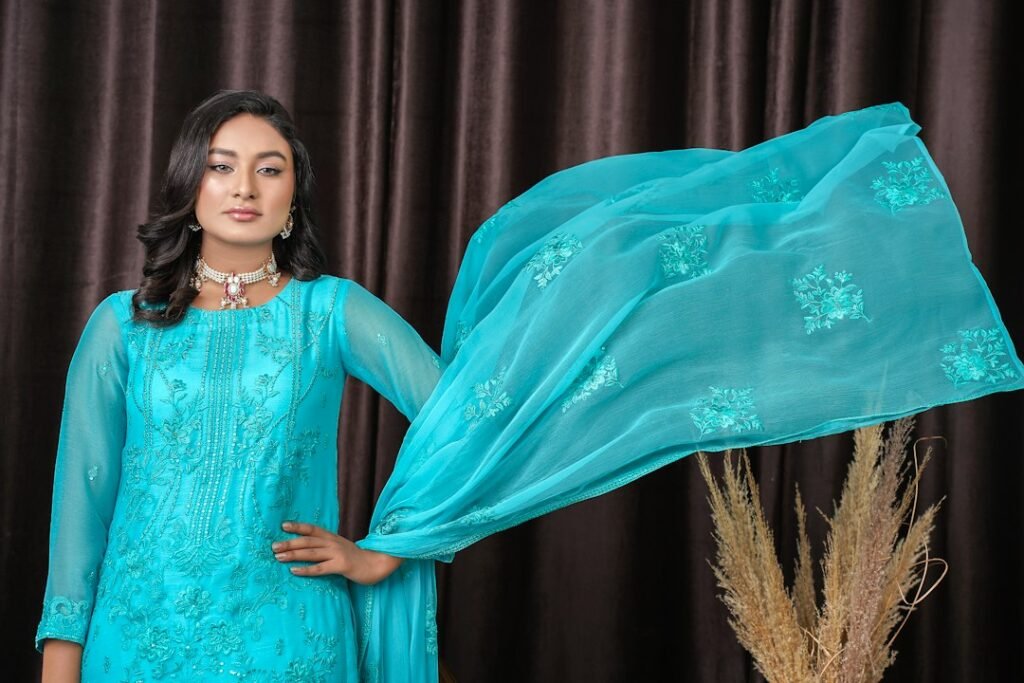
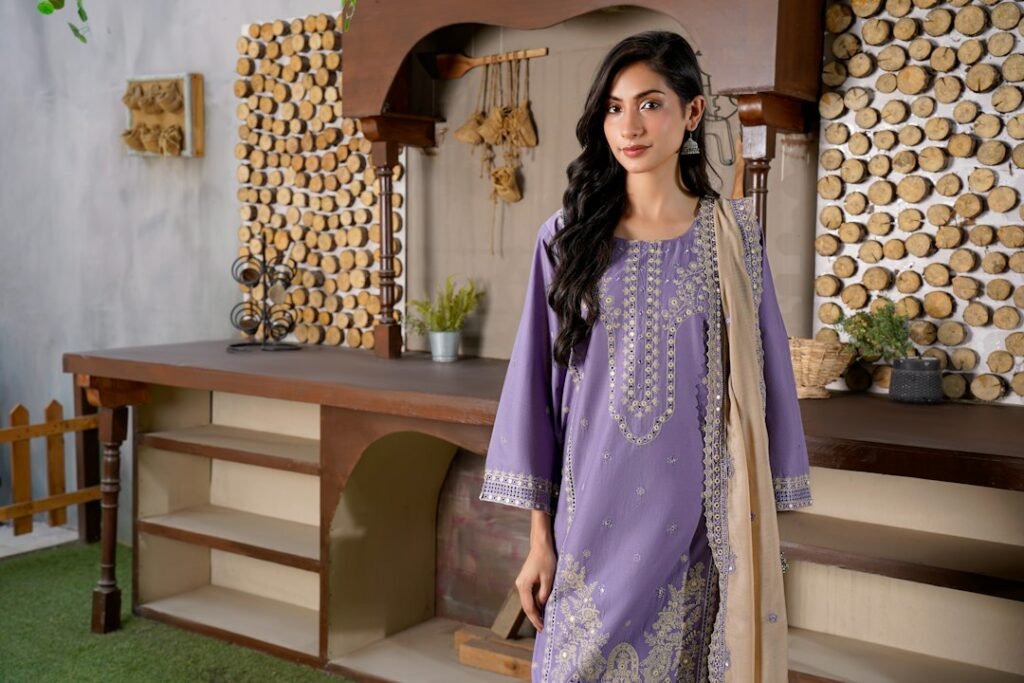
- Resham: Silk or synthetic thread embroidery. Smooth matte or slightly glossy colored stitches forming florals, vines and fine motifs. Resham is soft and lies flat, ideal for daytime or lightweight fabrics.
- Sequins: Small reflective discs attached by hand or machine. They can be scattered (subtle shimmer) or densely packed (mirror-like sparkle). Sequins often complement Tilla or Zardozi rather than replacing them.
Which technique suits which occasion and fabric?
Match embroidery type to event and fabric to avoid surprises.
- Formal/bridal: Zardozi and heavy Tilla pair well with rich fabrics—velvet, brocade, heavy silks—because their weight and dimensionality suit structured garments.
- Festive evening: Dense sequins or mixed Tilla+sequins on chiffon or georgette create elegant movement and sparkle for parties.
- Daytime and semi-formal: Resham on lawn, cotton-silk, or lightweight silk keeps outfits comfortable while looking refined.
- Casual or daily-wear: Light Resham accents or minimal Tilla borders avoid stiffness and excessive care needs.
How to judge quality when you’re shopping
Start with a few quick checks you can do in-store or from photos when buying online:
- Examine the back of the embroidery: neat, tied-off threads and minimal loose ends indicate hand finishing; messy backs can mean weak joins and fragility.
- Check how the work sits: raised, tight zardozi should feel secure; if metallic threads wobble or sequins spin easily, stitching is likely poor.
- Look for consistent spacing and repetition in motifs—uneven motifs suggest rushed or machine-only work.
- Feel the fabric: heavy metallic work on ultra-light fabric will pull and distort; quality pieces match embroidery weight to base fabric.
Care basics: what to avoid and what to do
Each technique has specific vulnerabilities:
- Tilla and Zardozi: Avoid machine washing; dry-clean only or expert hand-cleaning. Store flat or rolled with tissue to avoid crushing raised metallic work. Keep away from moisture to prevent metal tarnish.
- Resham: Often more forgiving—gentle hand wash or cold-water delicate cycles are acceptable if the garment tag allows; use mild detergent and air dry flat to preserve stitch tension.
- Sequins: Can snag and crack. Turn garment inside out when laundering and use garment bags for machine washing only when explicitly permitted.
Choosing between hand and machine embroidery
Hand embroidery (especially hand zardozi and resham) tends to be more durable and detailed but costs more; machine work yields consistent patterns and lower prices but can lack texture and fine finishing. Decide based on budget, how long you want the garment to last, and whether you value unique artisan imperfections.
Practical styling tips and product help
Consider how embroidery reads with accessories and silhouette:
- Heavy zardozi or dense sequins pairs with clean silhouettes—avoid heavy necklines or extra layers near the embroidered area to prevent visual clutter.
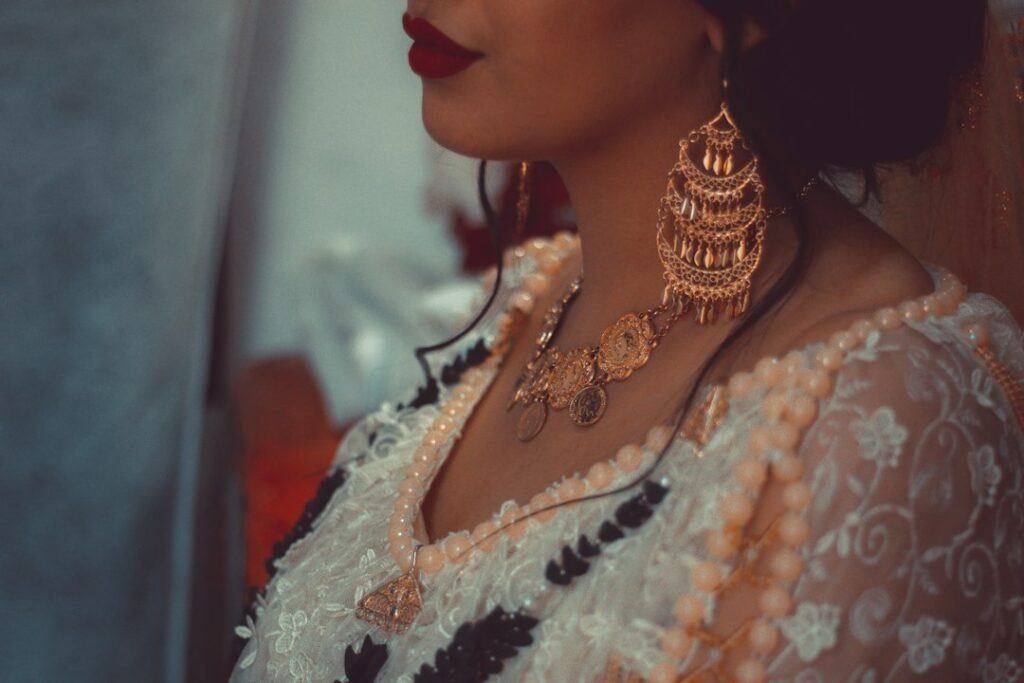
- Resham florals match small, delicate jewelry; metal-heavy work works with gold-tone statement pieces.
- For a finishing touch that complements embroidered eveningwear, an embellished clutch is practical and stylistically aligned.
This beaded clutch works well with embroidered outfits because its mixed bead-and-sequin surface harmonizes with both metallic and sequin-rich garments while keeping the overall look cohesive.
Repair and alteration basics
Small repairs are usually possible: resewing loose sequins, replacing a few metallic threads, or adding supportive backing to prevent puckering. For significant reconstruction—reshaping heavy embroidery to sit better—look for a tailor experienced with handworked embellishment. Always test any steaming or pressing on an inconspicuous area first and protect metallic threads with a thin cloth when ironing.
When to ask for custom work vs. buying ready-made
Choose custom when you need precise motif placement (for example, embroidery aligned to a neckline), unique colorways, or higher-quality handwork. Ready-made pieces suit shoppers who prioritize budget or faster turnaround and are content with commonly used motifs and placements.
Where to learn more or commission careful work
Local artisan workshops and community craft centers are the best places to see techniques up close and to commission handwork. Online marketplaces can be useful for comparisons, but ask for close-up photos of backs and edges before buying.
- Confirm the embroidery type (Tilla, Zardozi, Resham, or sequins) from close-up images.
- Inspect the reverse side for neat finishing and secure knots.
- Match embroidery weight to fabric—avoid heavy work on lightweight cloth.
- Check care instructions and plan for dry-cleaning if Zardozi or heavy metallic threads are present.
- Ask for a repair policy or local tailor recommendation for future maintenance.
Know what to look for: Tilla is flat metallic thread, Zardozi is raised metalwork, Resham is silk thread, and sequins add shine. Match technique to fabric and occasion, inspect backs and tension for quality, and choose dry-cleaning or gentle hand care according to materials.
Can I machine wash garments with Resham embroidery?
Often yes, if the care label permits. Use a cold delicate cycle or hand wash and air dry flat; avoid agitation that loosens stitches.
Will metallic threads tarnish over time?
Some do; avoid moisture and store in breathable, dry conditions. Professional polishing or careful conservation may be necessary for heirloom pieces.
Are sequins sewn the same way in all pieces?
No—they can be hand-stitched or machine-attached; hand-sewn sequins are usually more secure and lie flatter.
Is zardozi suitable for lightweight fabrics like chiffon?
Generally not—zardozi is heavy and can sag or distort lightweight fabrics; if used, it should be limited to small motifs or backed with sturdier fabric.
How do I tell handwork from machine embroidery in photos?
Look for slight irregularities in stitch length and spacing, visible thread ends, and a less mechanical uniformity—these often indicate handwork.