




 Contact Us

What really matters — and what you can ignore
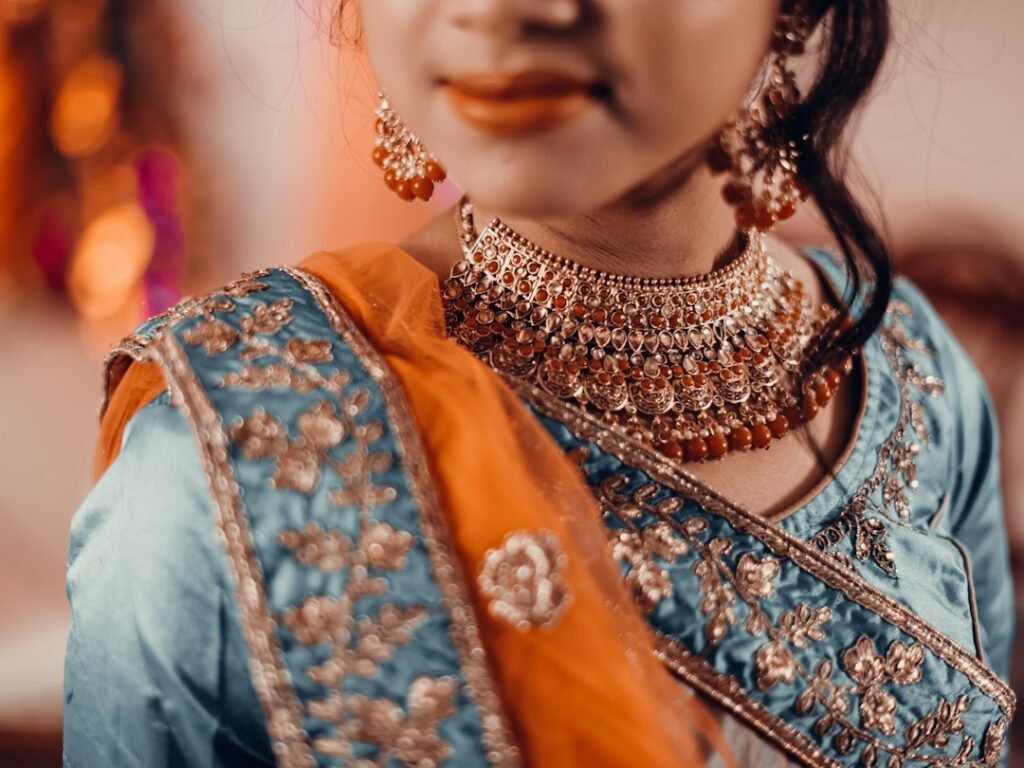
Focus on preserving three fragile features: embroidery/metal threads (tilla, zardozi), lightweight transparent fabrics (chiffon), and natural fibers (silk). Ignore trends like special detergents for synthetic blends unless your garment tag specifies them. The main risks are abrasion, heat, soaking that loosens handwork, and storage that crushes sequins or attracts pests.
End result: how your garment should look and feel after care
Clean, flat or gently hung pieces with embroidery intact, no stiff residue, soft chiffon that drapes, and silk that retains sheen without water spots. Stains removed or minimised without weakening threads. The goal is functionally clean plus preserved handwork—sometimes professional help is the correct choice.
Quick decision: hand-wash, spot clean, or dry-clean?
Use this rule: if the garment has heavy metallic thread (zardozi/tilla), dense sequins, glued stones, or a lined embroidered front panel, choose dry-cleaning. If embroidery is light, mostly thread/resham, and fabrics are unlined silk or chiffon, proceed with careful hand-washing or targeted spot cleaning.
What you’ll need before you begin
- Mild, pH-neutral detergent or baby shampoo
- White cotton cloths, soft toothbrush, cotton swabs
- Large clean basin, several towels
- Padded hangers and breathable cotton storage bags
- Optional: professional dry-cleaner experienced with South Asian garments
Step-by-step care: cleaning embroidered, chiffon and silk Pakistani clothing
1. Inspect and test
Lay the outfit flat. Check for loose threads, glued embellishments, and manufacturer care labels. Test colorfastness: dampen a white cotton swab with diluted detergent, rub an inconspicuous seam or inside hem. If color transfers, do not submerge—dry-clean.
2. Spot-treat stains first
For surface dirt or food: blot (don’t rub) with a damp white cloth. For oily stains: sprinkle talc or cornstarch to absorb, brush off after 30 minutes, then treat with a tiny amount of mild detergent solution and blot. For protein stains (sweat, milk): use cool water and enzyme-free detergent; warm water can set them.
3. Hand-washing delicate chiffon and silk (when safe)
- Fill a basin with cool water and 1 tsp mild detergent per 4 liters.
- Submerge gently—support heavy embroidery so it doesn’t sag. Do not rub embroidered areas; agitate only the plain fabric sections by moving water around.
- Soak 3–5 minutes max for silk; up to 10 minutes for cotton blends. Avoid long soaks for handworked pieces.
- Rinse in cool water until detergent is gone. For silk, a splash of white vinegar (1 tbsp per 4 liters) restores sheen; rinse after.
- Press out water by laying the garment flat on a towel and rolling—do not wring.
4. Drying without damage
For chiffon and silk: reshape and dry flat on a padded towel away from direct sunlight. If hanging, use wide padded hangers and drape the heavily embroidered piece over the hanger so weight is distributed—avoid a single shoulder point that stretches fabric. Never tumble dry.
5. Ironing and steaming
Iron silk on the lowest setting with a clean cotton press cloth between iron and fabric. Iron from the wrong side over embroidery if needed, using light pressure—avoid pressing directly on sequins or metallic threads. For chiffon, steaming (from a distance) is safer; hold the steamer a few inches away and smooth with your hand through a cloth.
Repair and maintenance for handwork and embellishment
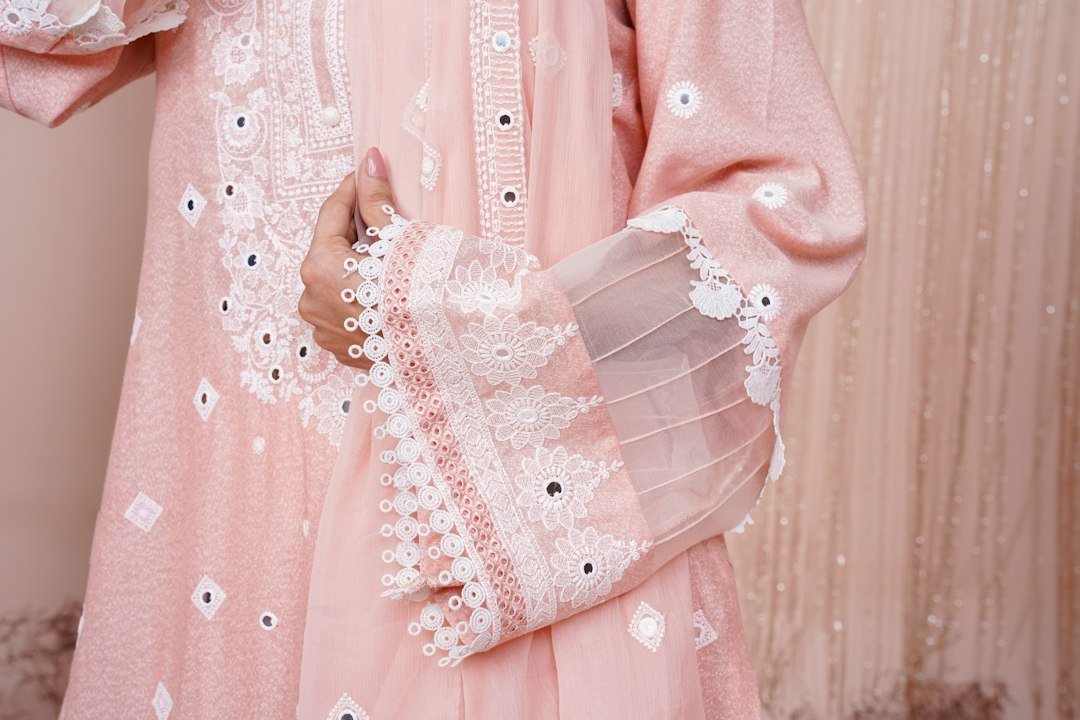
Loose threads or beads: secure by hand with a fine needle and matching thread. For missing sequins or tilla, keep a small repair kit: thin silk thread, spare sequins (often included with garments), and a fine beading needle. For large repairs or antique zardozi, use a professional embroiderer—attempting heavy mending at home risks more damage.
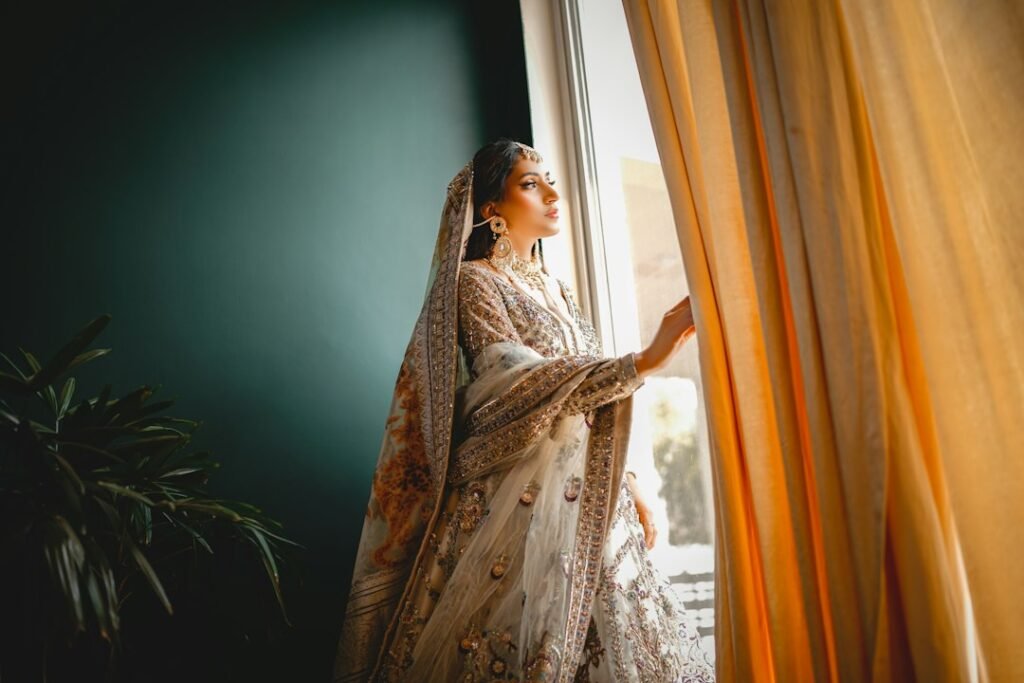
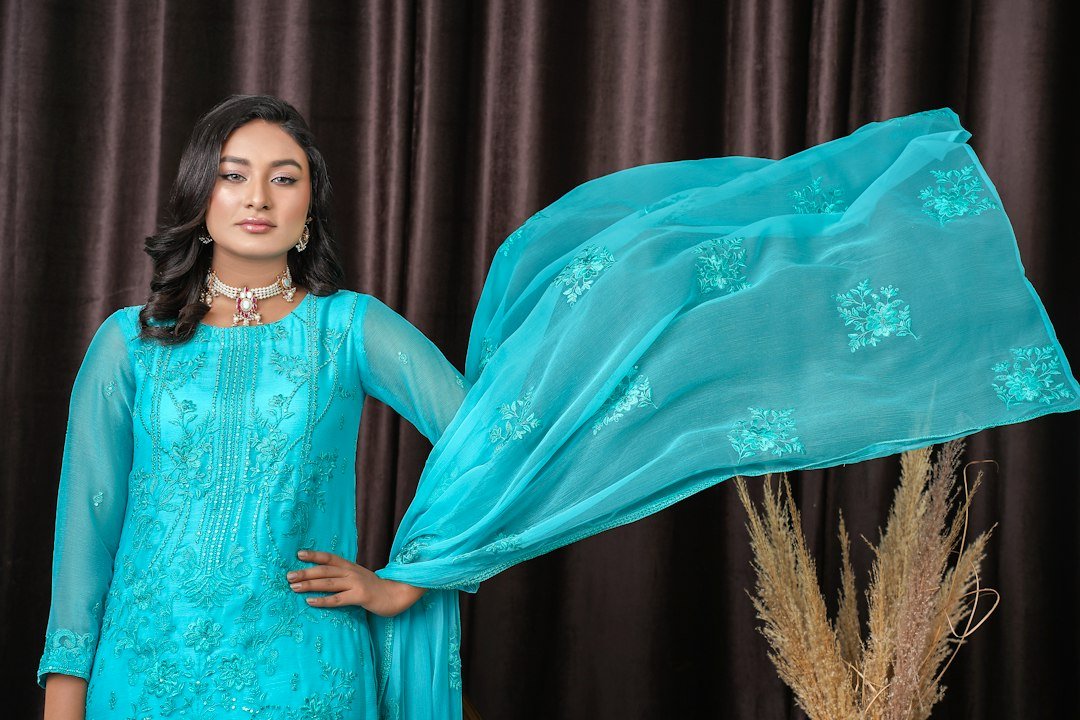
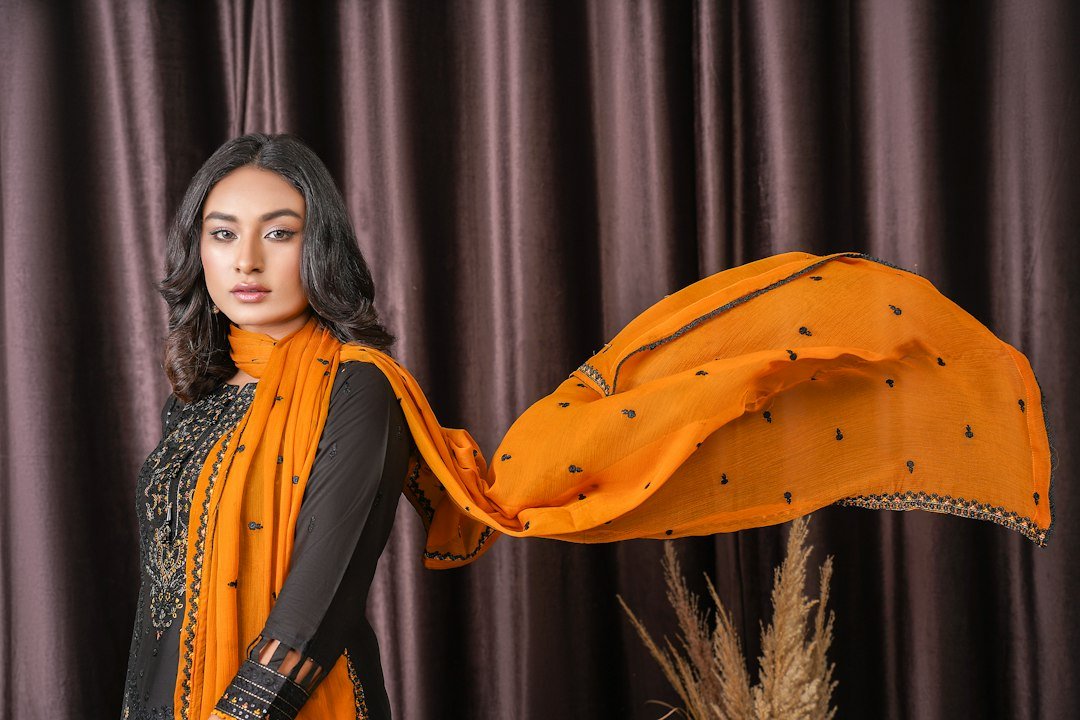
Why this product helps: a handworked ensemble (ID 159) demonstrates typical delicate construction—treat similar outfits as described above. If your wardrobe includes similar pieces, keep one professional dry-cleaner and a home care kit ready.
Troubleshooting common problems
Staining after home wash
If a ring or water spot forms, rewet the area with distilled water and blot toward the stain edge; for silk, a tiny drop of white vinegar in water can help lift mineral rings—test first.
Rigidity from detergent residue
Repeat a gentle rinse with several water changes until the fabric feels soft. For silk, final rinse with a teaspoon of white vinegar per basin helps remove soap film.
Snagged chiffon threads
Clip a pulled loop close to the fabric surface with fine scissors; do not pull the loop through. If a hole opens, reinforce from the underside with a tiny patch of matching fabric or take to a tailor for almost invisible darning.
Storage: how to keep pieces safe between wears
Store in breathable cotton garment bags—not plastic. Fold heavily embellished panels with acid-free tissue between folds to prevent abrasion and creasing. Add cedar blocks or sachets for moth prevention, but avoid direct contact with fragrance oils. For long-term storage, re-fold periodically to avoid permanent creases.
- Test colorfastness in an inconspicuous spot.
- Decide: dry-clean for heavy metallic work or glued stones.
- Spot-treat stains before full wash.
- Use cool water, mild detergent, and short soaks for silk/chiffon.
- Dry flat or on padded hangers, away from sun and heat.
- Store in breathable bags with tissue between folds.
Preserve the value of embroidered, chiffon and silk Pakistani clothing by choosing the simplest safe action: spot-treat when possible, hand-wash only when colorfast and construction allows, and dry-clean if metallic thread, dense beading or glued stones are present. Gentle handling, correct drying and thoughtful storage prevent most damage.
Can I machine-wash chiffon Pakistani outfits?
Generally no—machine agitation and spin cycles will pull delicate chiffon and may loosen handwork. Use hand-wash or professional cleaning unless the label explicitly allows a gentle machine cycle and the garment has no handwork.
How often should I dry-clean embroidered outfits?
Only when necessary—visible soiling, body-oil buildup, or after heavy wear. Frequent dry-cleaning can stress metallic threads, so spot cleaning and airing can extend intervals between professional cleans.
Will vinegar ruin silk?
No—diluted white vinegar used sparingly in the rinse helps restore silk sheen and remove detergent residue; always test first and rinse thoroughly afterwards.
How do I remove perfume or sweat odor without washing?
Air the garment inside out on a padded hanger, then lightly steam from a distance. For persistent odors, professional cleaning is safer than aggressive home treatments.
Can I repair missing sequins myself?
Yes, for small areas: use matching sequins and a fine needle to stitch them in place with thin thread. For large or complex repairs, use a professional embroiderer to preserve pattern integrity.