




 Contact Us

Start with the result you want: refined, not overwhelmed
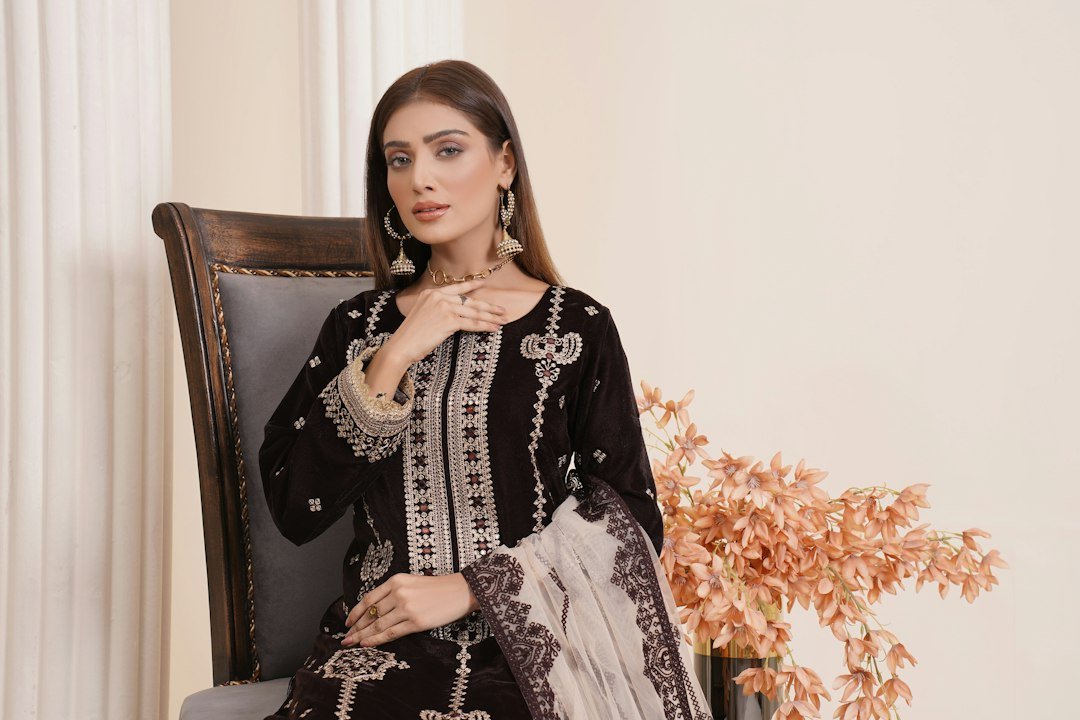
If your goal is an elegant evening look, think restraint first. Black Pakistani formal wear reads as luxurious by default—your job is to choose one clear focal point (silhouette, detail or accessory) and let everything else support it. This keeps the outfit intentional instead of heavy or costume-like.
Choose the right fabric and finish for evening lighting
Evening light flattens texture, so pick fabrics that hold shape and reflect a little light without shouting. Ideal choices: silk blends, crepe, georgette with lining, or a finely embroidered organza panel. Avoid thin cotton-lawn for a formal evening—it looks casual under event lighting.
Finish matters: tonal embroidery, subtle sequins, beads with matte thread, or a satin border reads upscale. If your piece has heavy zari or dense sequins, keep the rest of the look pared back to avoid looking over-embellished.
Pick a silhouette that flatters the occasion and your movement
Decide how you want to move through the evening and select silhouette accordingly:
- Sharara or gharara: dramatic hemline and balance—pair with a fitted, slightly longer kameez for proportion.
- Anarkali: good for formal dinners; a streamlined waist and flare keep it graceful in photos.
- Tunic + straight trousers: minimal, modern, and elegant—works best with rich trim or a statement dupatta.
- Straight kameez with palazzo: a contemporary formal choice; choose palazzo widths that don’t swamp your shoes.
Tip: If your outfit is heavily embroidered on top, prefer a simpler bottom to avoid visual clutter.
Use the dupatta to shape the look
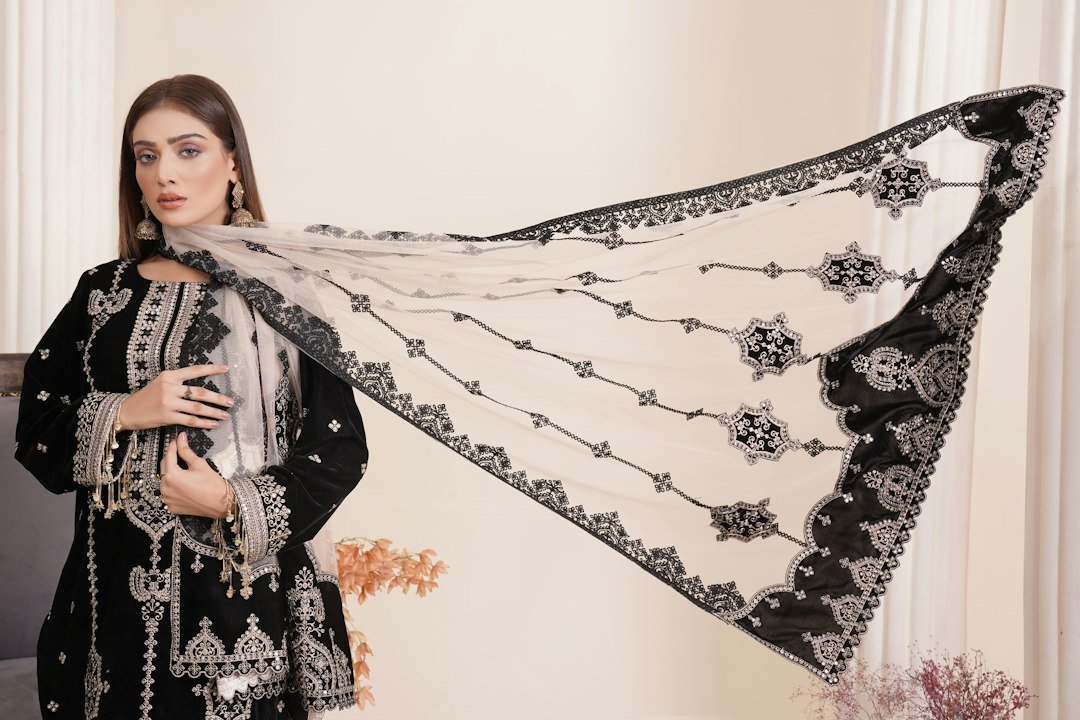
The dupatta is both functional and a styling tool. Evening-friendly drapes:
- Single-shoulder throw with a brooch near the collarbone for a Grecian, modern feel.
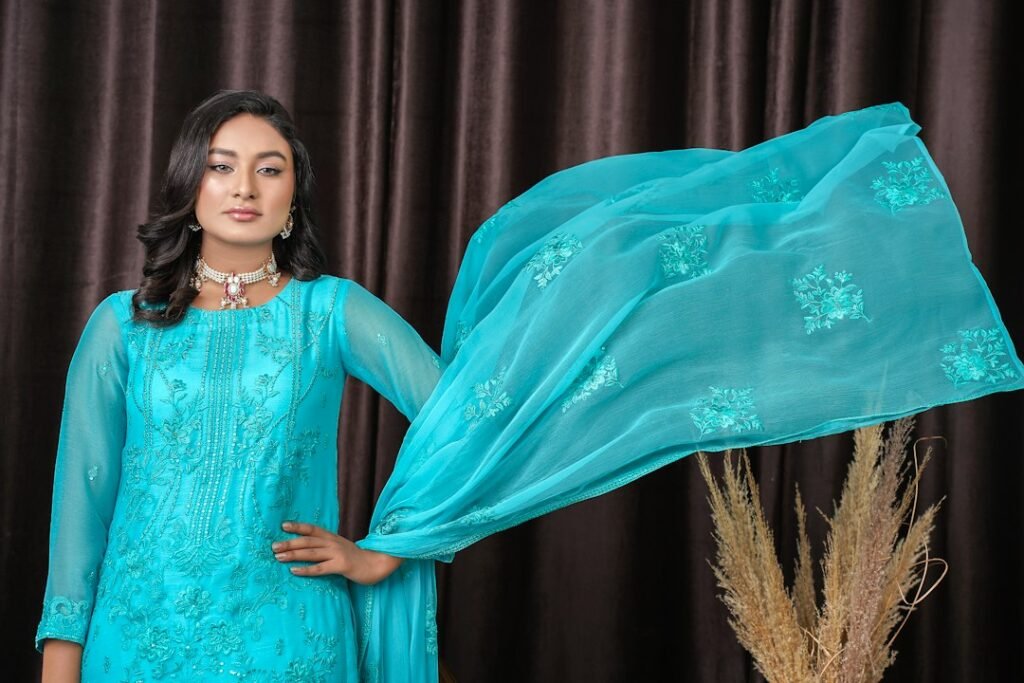
- Cascade over one arm so embroidery is visible—keeps the silhouette clean and gallery-friendly.
- Light, sheer dupatta tucked at the waist for dancing—prevents it from slipping while maintaining elegance.
If the dupatta is heavily embellished, anchor it with minimal jewelry and a sleek clutch.
Choose accessories with a clear supporting role
Decide whether jewelry or your bag will be the focal accessory—don’t make both focal.
- Jewelry first: pick one statement piece—jhumkas, a choker, or a cocktail ring—and keep other pieces small and tonal. For black outfits, warm metals (gold, rose gold) and kundan/lac work beautifully.
- Bag first: if you choose a statement clutch, go with delicate jewelry. A metallic or embellished clutch gives enough sparkle without more bling.
This faux suede evening clutch is a reliable choice when the outfit already carries embroidery or sequins; it adds texture and sits flat under the arm so the silhouette remains clean.
Pick shoes that finish the line and consider practicality
Shoe choice depends on hem length and expected activity. For floor-grazing shararas or anarkalis, low-to-mid heels (1–2.5 inches) are safer and keep the drape from catching; kitten heels in black or metallic work well. For cropped trousers or palazzos, strappy sandals or pointed-toe pumps show deliberate styling.
Color rule: match shoes to a secondary accent in the outfit (metal trim, clutch, or jewelry) rather than to the black base—this creates a purposeful palette.
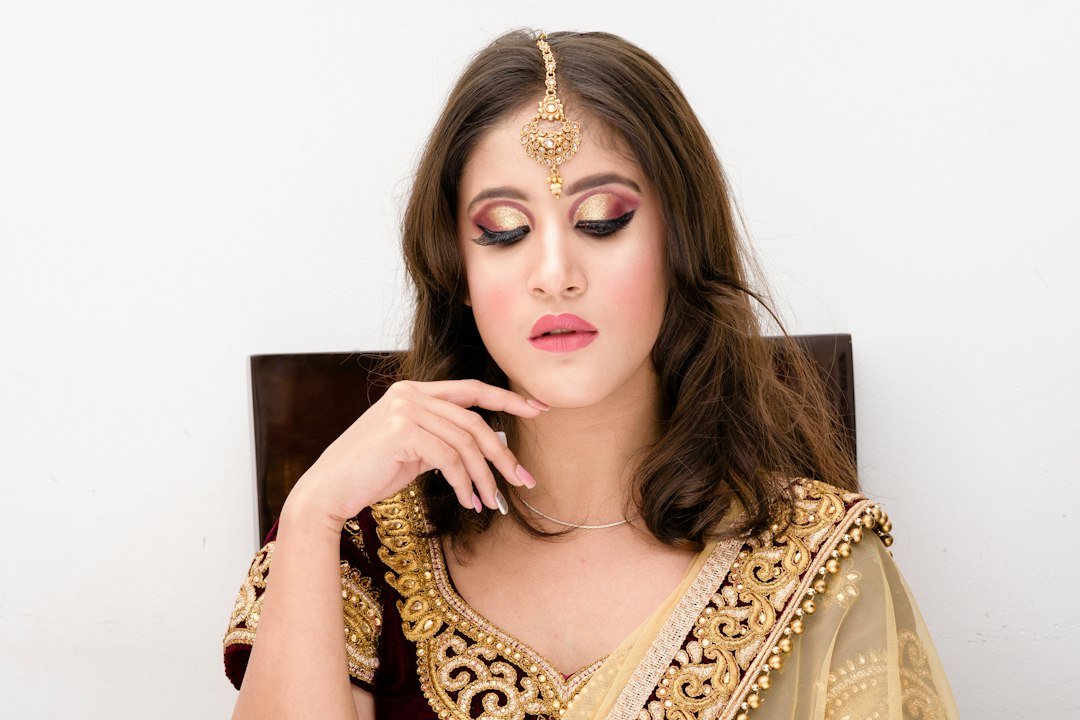
Makeup and hair that suit evening formality
Evening makeup can be slightly stronger than daytime—focus on one feature. If you do a smoky eye, keep lips neutral; if you opt for a bold berry or red lip, keep eye makeup soft. Use a diffused highlighter (temple and cheek) to catch low light without glittering.
Hair options by outfit: a sleek low bun with a center part suits tailored silhouettes; soft waves complement flowing anarkalis; a braided low ponytail can ground a heavily embellished top while still feeling dressy.
Layer thoughtfully for comfort and proportion
Evenings can get cool—add a structured shawl or a cropped velvet jacket that matches the outfit’s trim. Avoid long capes unless the event calls for theatricality, as they change the silhouette dramatically and can compete with embroidery.
Troubleshooting common problems
- Too heavy: If the outfit looks bulky, remove one layer of jewelry and switch a heavy dupatta for a sheer one; tuck the dupatta at the waist to flatten the profile.
- Too plain: Add one high-impact accessory—a embellished clutch or statement earrings—rather than multiple small pieces.
- Shows lint/dust easily: Carry a lint brush and choose matte trims if the event is outdoors with bright lighting.
- Slipping dupatta: Secure with discreet safety pins or a decorative brooch near the shoulder.
When to adapt for specific events
Wedding evening: you can go richer—velvet trims or denser zari work if your role justifies it (close family or bridesmaid). Formal corporate dinner: lean minimalist—matte fabrics, subtle trim, low heels. Black-tie South Asian fusion: introduce a metallic belt or a modern clutch and favor tailored cuts.
Final decision: one complete outfit checklist
Before you walk out the door, make a single decisive call: choose whether jewelry or your clutch is the star. Adjust shoes and dupatta to support that choice, and you’ll arrive composed and appropriately elegant.
- Confirm fabric and lining are suitable for evening light and temperature.
- Pick one focal accessory: jewelry or clutch.
- Ensure dupatta styling is secure for movement (pin or tuck).
- Match shoes to a secondary accent (metal or trim), not just black.
- Do a quick lint and thread check under event lighting.
Black Pakistani formal wear becomes elegant by prioritizing one focal point, matching fabric and finish to evening light, and balancing accessories so the silhouette and movement remain clean. Make one clear styling decision, then align shoes, dupatta and makeup to support it.
Can I wear heavy embroidery in black for a formal evening?
Yes—heavy embroidery reads formal, but balance it by simplifying other elements: plain bottoms, minimal jewelry and a small clutch to avoid visual overload.
What color metal works best with black Pakistani wear?
Warm metals like gold and rose gold add richness; silver or white gold reads more modern. Choose the metal that ties into your outfit’s embroidery or clutch accents.
How do I keep a dupatta from slipping during an event?
Use small safety pins at the shoulder seam or a decorative brooch to anchor it; tucking at the waist helps for dancing or mingling.
Are black heels always the best option?
Not always—match heels to a secondary accent like metallic embroidery or your clutch for a more intentional look; nude or metallic can lengthen the leg under palazzos.